|
|
 | ||
|
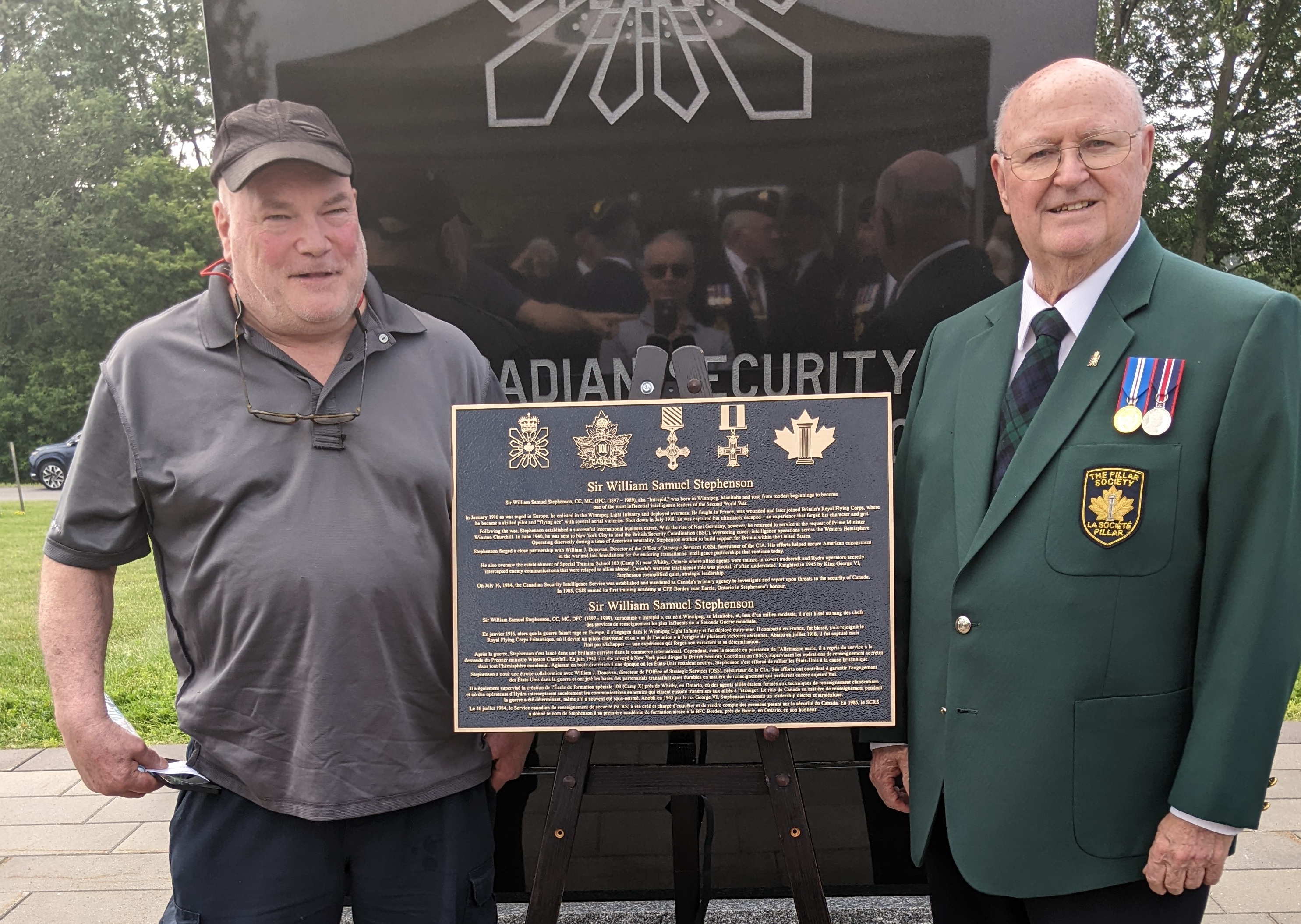
A Canadian Press despatch of November 9, 1962, from Alan Harvey of London, England, opens as follows: "After 17 tight-lipped years, a curtain was finally lifted today on the sensational cloak-and-dagger activities of Sir William Stephenson, perhaps Canada's top secret agent. "In a book called The Quiet Canadian, wartime colleague Montgomery Hyde tells for the first time the full, fantastic story of the intelligence operations Stephenson directed from a skyscraper office in New York's Rockefeller Centre." In 1954 most of the following material was prepared but not made available to the public. A letter from McKenzie Porter, then Assistant Editor, MACLEAN'S magazine, and internationally known reporter, wrote to the writer on Jan., 20, 1953 in part as follows: "I must once again refrain from giving you the private address of Sir William Stephenson." That indicates the precautions that had to be taken even at that time. William Samuel Clouston Stephenson, M.C., D.F.C., Croix de Guerre with Palm, was born on Point Douglas in Winnipeg, January 23, 1897. (See footnote at end of article). His father William Hunter Stanger, was of Irish descent. His mother, Gudfinna, was an immigrant from Iceland. There were three children of the marriage, two daughters and William who was the youngest child. Bill was only one year old when his father died and an Icelandic couple, Mr. and Mrs. Vigfus Stephenson, who also lived on Point Douglas, adopted the boy and he was given the family name. The Stephensons had four children of their own, two of whom are living, Jennie Hodgins, a widow, and Mundi, (Gudmundur K.) a plumber in Winnipeg. Mundi and William were much together in their boyhood years. Bill Stephenson attended the Argyle School and early showed a bent for mathematics and manual training. He was fond of athletics and excelled as a boxer both at school and later in the army overseas. When 16 years old Bill started to work for a railway company but soon after World War I broke out he enlisted in the 101st Regiment and obtained his commission before he was 19 years old. Within a year after he was in France he won the Military Cross. He was gassed and while convelescing learned to fly and on recovering transferred to the Royal Flying Corps. Within a period of six weeks he shot down 20 German planes and was awarded the D.F.C. One of his victims was a brother of the famous Baron von Richthofen. In 1918 he went to the aid of a French aircraft which was being attacked by five Germans. By mistake the Frenchman hit Stephenson’s plane and he was forced to bail out on German territory and was taken prisoner. For this unfortunate incident the French Government awarded Stephenson the Croix de Guerre with Palm. In the prison camp William got hold of a can opener which had been patented in the Central Power countries. He managed to escape from the prison camp and took the can opener with him to England. He made an improvement on it and had it patented. At the end of World War I, William returned to Winnipeg but stayed only about a year and then went back to England. In 1924 he married Mary French Simmons, an American girl from Springfield, Tennessee. In England Stephenson obtained patents for a number of inventions, the chief one of which was the development of a device for transmitting photographs. In 1924 the first successful radio-transmitted newspaper photograph appeared in the London Daily Mail. It had been sent and received on equipment invented by Sir William. This invention paved the way for television. It is reported that through this invention Sir William amassed a fortune of over a million dollars and became a leading industrialist in England. In the early thirties he was in control of many British corporations such as Sound City Films, General Aircraft Limited, Earl's Court Limited, Pressed Steel Co. Ltd., etc. By the middle of the thirties Stephenson was operating on five continents. His contacts in high places and his skill in picking up information and dovetailing it together enabled him to see the approach of the second world war. He disclosed the facts to Baldwin and Chamberlain but could not persuade them. Winston Churchill listened and through Stephenson he obtained ammunition for his speeches on the growing might of Hitler. When Churchill became Prime Minister in 1940 he needed a man to coordinate counter-espionage, anti-sabotage and secret intelligence extending to both North and South America. He had no hesitation in selecting William Stephenson. Just before the fall of France Stephenson reached New York and set up a huge organization, The British Security Corporation <sic>, which carried out multifarious assignments on this side of the Atlantic for various branches of the British Secret Service. Before the war was over the headquarters staff in New York exceeded one thousand, a large number of whom were Canadians, more or less hand-picked. From Canada he recruited military personnel from the highest to the lowest and civilians from scientists and economists to farmers, policemen and others. Sir William was in Ottawa the night that the cipher clerk Igor Gouzenko fled the Soviet Embassy, but that was no accident. Through secret channels Gouzenko had made it known that he had valuable information to disclose. Sir William strongly urged that this source of information be tapped and steps taken to protect Gouzenko. It is interesting to note that Montgomery Hyde is reported to have said in his book that "but for Stephenson's intervention, Gouzenko might not have lived to tell his story".
Writing in Maclean's Magazine in the 1 December 1952 issue:
 Mr. McKenzie Porter in part says as follows:
In 1946 President Trueman awarded Stephenson the Medal for Merit, the highest civilian decoration in the U.S., an honor which for the first time was given to a non-American. That same year he retired to Jamaica where he lived until early in 1951. It was while William was in Jamaica, that he was able to accept a Knighthood from the late King George VI without embarrassing the Canadian Government and became Sir William Stephenson. In 1951 Sir William returned and originated "World Commerce", a British-Canadian American company with headquarters in New York. The vice-president of World Commerce, John Pepper, said: "He is a great Canadian and has done more than any other man in the world markets to bring Canada's enormous potential to the notice of international investors." The following are comments by world leaders in Secret Service work. William J. Donovan, Head of the U.S. Office of Strategic Services: "Bill Stephenson taught us all we ever knew about foreign intelligence." Ernest Cuneo, Wartime liaison officer between the British Security Corporation and Donovan's Office of Strategic Services: "Stephenson is the only man who enjoyed the unqualified confidence of Churchill and Roosevelt." Alan Harvey's press despatch discloses that Sir William, as all top flight secret service agents, employed female spies and gives one particular instance. That indicates how revealing Montgomery Hyde's book must be. The Canadian public eagerly awaits the arrival of "The Quiet Canadian"—one may add, both the book and the quiet Canadian himself. The certificate of Birth gives the following information: Name, William Clouston Stanger; Date of Birth, January 23, 1897; Place of Birth, Winnipeg; Name of Father, William Hunter Stanger; Maiden Name of Mother, Sarah Goodfina Johnston; Date of Registration, February 26, 1897.
Mrs. Stanger left Winnipeg with their two daughters. When World War I broke out Bill advanced his age one
year in order to join the army.
|
|
|
|
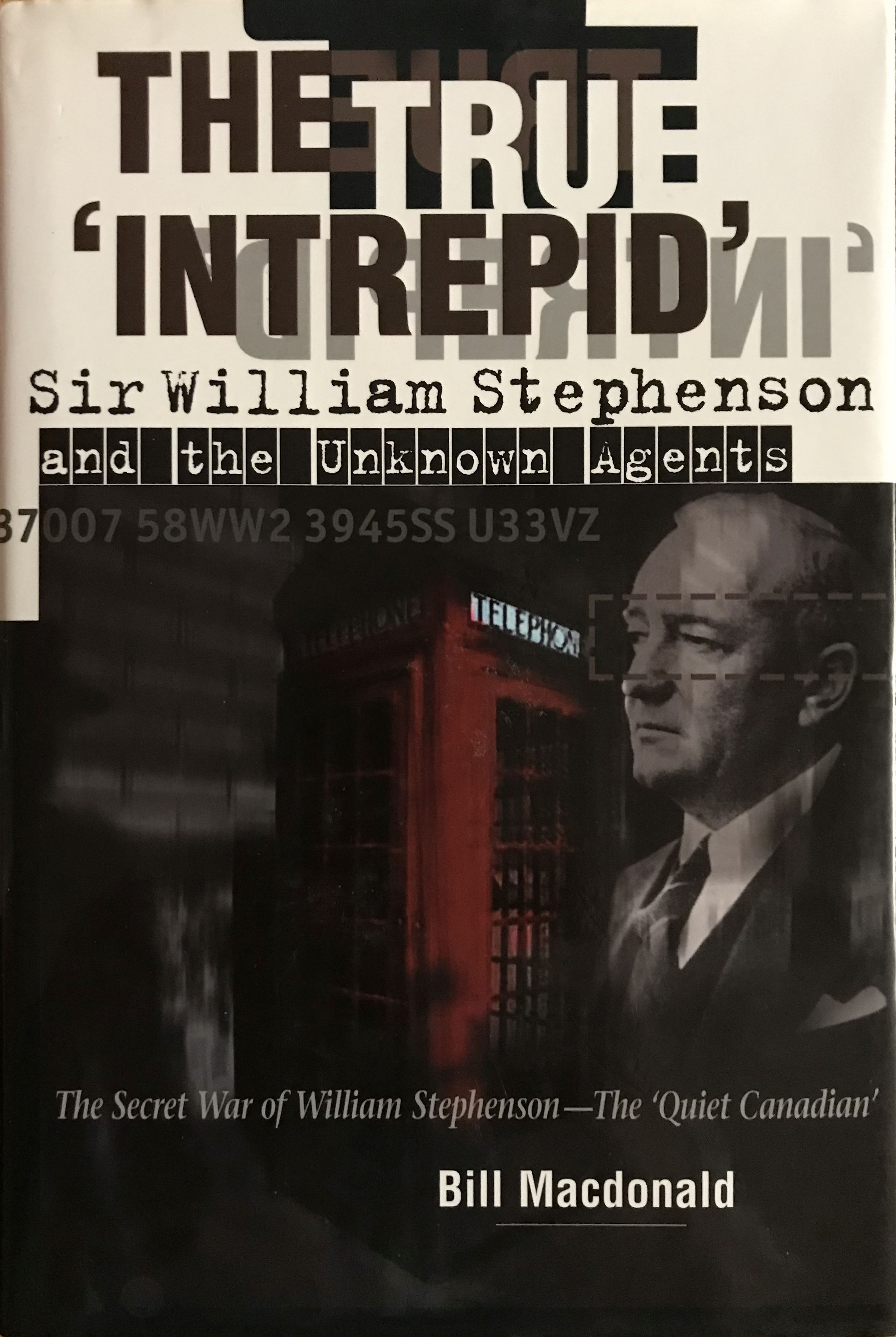
"The True Intrepid - Sir William Stephenson" (432 pages) by Bill Macdonald, 1998. I have a hardcover copy (signed by the author) in my collection. |
Hardcover book written by Bill Macdonald (ISBN: 1894254015). From the listing on Google Books, we have:
"The World War II intelligence exploits of Canadian spymaster William Stephenson were celebrated in espionage lore the world over. This mysterious man known simply as 'Intrepid' established the secret World War II espionage organization known as British Security Coordination and is said to bethe real lifemodel for James Bond.This edition of The True Intrepid features personal interviews with those who worked with Stephenson and a foreword by CIA's staff historian Thomas F. Troy. Of special historical significance are the revelations of the late Benjamin deforest Bayly who had never before spoken about his espionage work.Bayly was the Allies forces communications genius whose electronic wizardry helped guard top secrets and win the Battle of the Atlantic. In this fascinating re-examination of the historical record, Bill Macdonald documents Stephenson's clouded early life and unravels the tangled strings of information that runs through secret papers and previous book to reveal the astonishing true story of the man who said, "Nothing deceives like a document."
|
|||
|
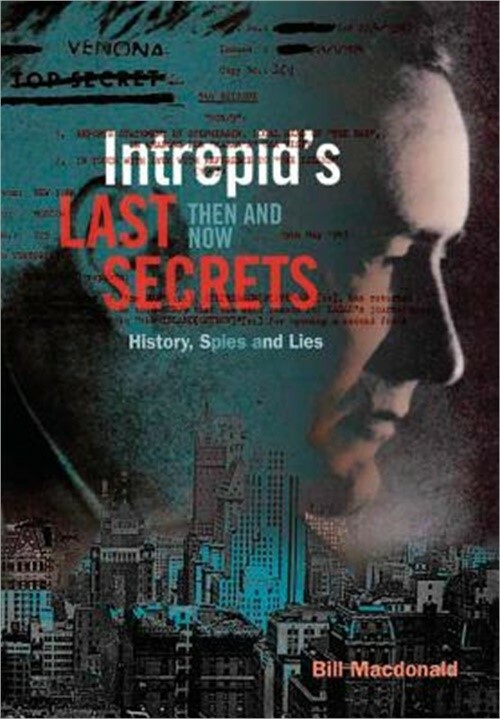
"Intrepid's Last Secrets - Then and Now" (545 pages) by Bill Macdonald, 2019. I have a hardcover copy in my collection. |
Hardcover book written by Bill Macdonald (ISBN: 9781525524134). From the listing on Google Books, we have: "In this engrossing follow-up to The True Intrepid, author Bill Macdonald explores secrets only hinted at in that book. The WW II Macdonald explores secrets only hinted at in that book. The WW II Canadian spymaster William Stephenson - known widely as "Intrepid" Canadian spymaster William Stephenson - known widely as “Intrepid" was not only tasked to get help for anti-Nazi Europe and assist setting up was not only tasked to get help for anti-Nazi Europe and assist setting up an American intelligence agency.Stephenson faced a secret Anglophile an American intelligence agency.Stephenson faced a secret Anglophile group covertly seeking a quick peace with Adolf Hitler. Often referred to group covertly seeking a quick peace with Adolf Hitler. Often referred to as "The Milner Group;' the organization reportedly swayed major events as "The Milner Group;' the organization reportedly swayed major events of the twentieth century and likely has major influence today. of the twentieth century and likely has major influence today. Intrepid's Last Secrets: Then and Now Intrepid's Last Secrets: Then and Now explores The Milner Group's history in Canada, from its relationship to Canadian prime ministers of the first half Canadian prime ministers of the first half of the twentieth century - to its probable of the twentieth century - to its probable impact on modern cultural policy and impact on modern cultural policy and government. Both British and American government. Both British and American strands of the group are explored with strands of the group are explored with a study of some of the prominent early members, their philosophies, and their members, their philosophies, and their strategic influence on events and our lives. This book includes the final interview with the late Svetlana Gouzenko, who, along with her husband Igor, fled to Canada from the soviet Union in 1945. The information they brought with them revealed massive Soviet espionage in the West and helped trigger the Cold War. A few of Stephenson’s former British Security Coordination (BSC) agents tell their story for the first time and the organization’s major area of accomplishment - World War II communications (the genesis of the so-called "Five Eyes" agreement) - is explained.
Meticulously researched and engagingly written, Intrepid's Last Secrets presents a unique, fascinating, and ultimately deeply chilling take on modern history."
|
|||

|
"Codename Intrepid - The Spymaster Who Changed World War II" (133 pages) by Ethan Quinn, 2019. I have a softcover copy in my collection. |
Softcover book written by Ethan Quinn (ISBN: 9781080768448). From the listing on Google Books, we have:
"In Manitoba, Winnipeg, a bronze statue of Sir William Stephenson proudly stands as a testament to this hero's legacy. He was a dedicated soldier, a gifted inventor, an extraordinary businessman and a spy. From his humble Canadian beginnings, William Stephenson enlisted in the Royal Flying Corps and rapidly moved through the ranks of the armed forces.
|
|||
|
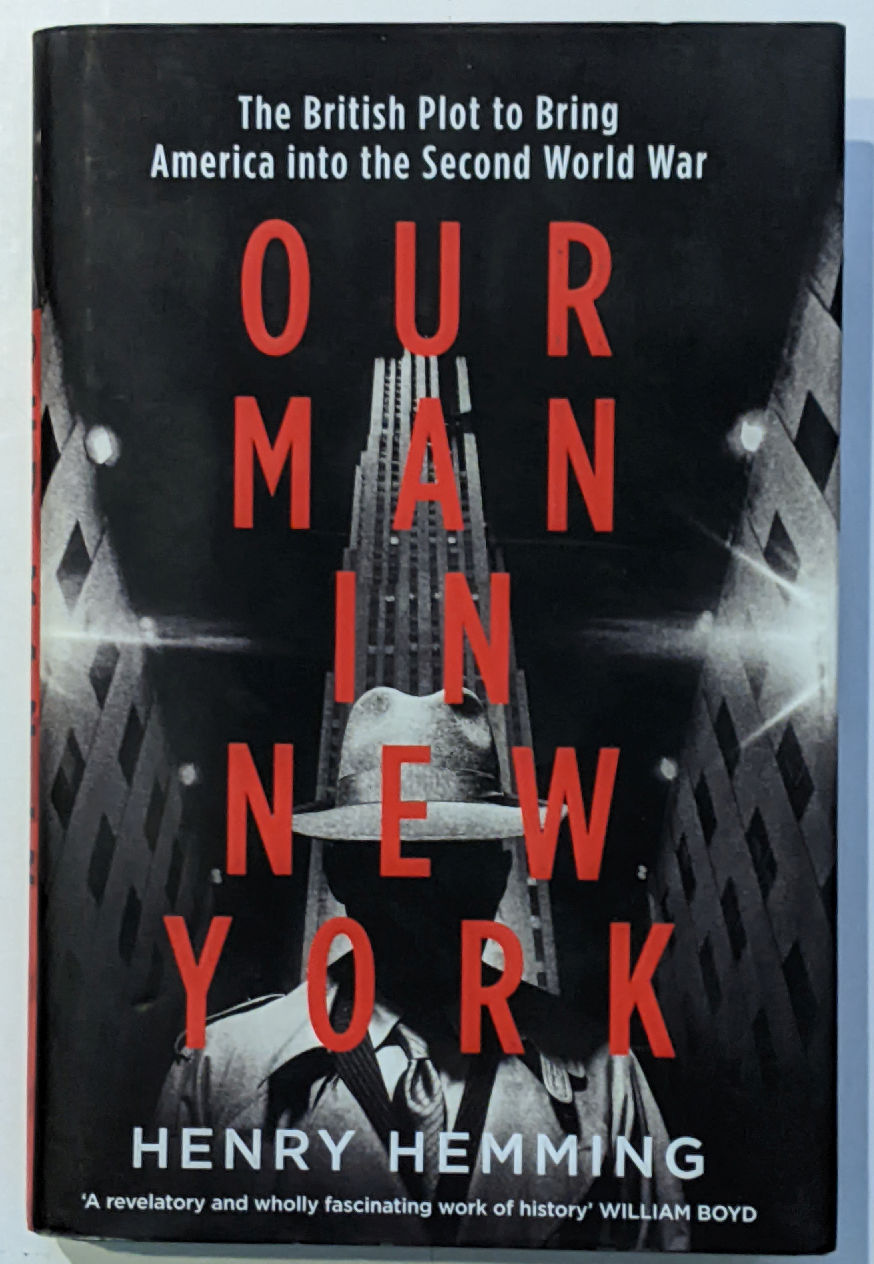
"Our Man in New York - The British Plot to Bring America into the Second World War" (371 pages) by Henry hemming, 2019. I have a hardcover copy in my collection. |
Hardcover book written by Henry Hemming (ISBN: 9781787474826). From the listing on Google Books, we have:
"The gripping story of a propaganda campaign like no other: the covert British operation to manipulate American public opinion and bring the US into the Second World War. When William Stephenson - "our man in New York"--Arrived in the United States towards the end of June 1940 with instructions from the head of MI6 to 'organise' American public opinion, Britain was on the verge of defeat. Surveys showed that just 14% of the US population wanted to go to war against Nazi Germany. But soon that began to change ... Those campaigning against America's entry into the war, such as legendary aviator Charles Lindbergh, talked of a British-led plot to drag the US into the conflict. They feared that the British were somehow flooding the American media with 'fake news', infiltrating pressure groups, rigging opinion polls and meddling in US politics. These claims were shocking and wild: they were also true. That truth is revealed here for the first time by bestselling author Henry Hemming, using hitherto private and classified documents, including the diaries of his own grandparents, who were briefly part of Stephenson's extraordinary influence campaign that was later described in the Washington Post as 'arguably the most effective in history'. Stephenson - who saved the life of Hemming's father - was a flawed maverick, full of contradictions, but one whose work changed the course of the war, and whose story can now be told in full."
|
|||
|
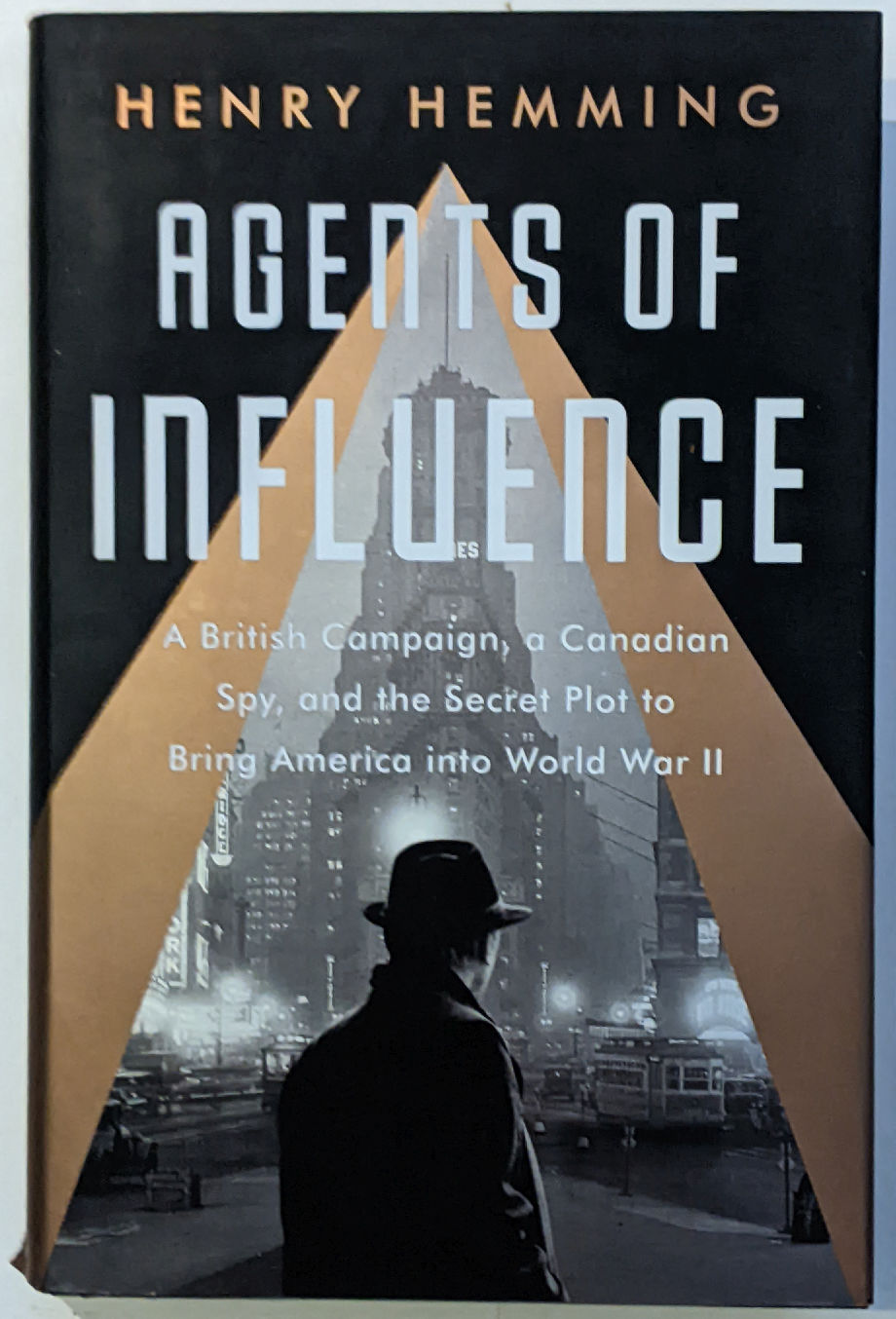
"Our Man in New York - A British Campaign, a Canadian Spy, and the Secret Plot to Bring America into World War II" (371 pages) by Henry hemming, 2019. I have a hardcover copy in my collection. |
Hardcover book written by Henry Hemming (ISBN: 9781541742147). From the listing on Google Books, we have:
"The astonishing story of the British spies who set out to draw America into World War II
As World War II raged into its second year, Britain sought a powerful ally to join its cause-but the American public was sharply divided on the subject. Canadian-born MI6 officer William Stephenson, with his knowledge and influence in North America, was chosen to change their minds by any means necessary.
|
|||
|
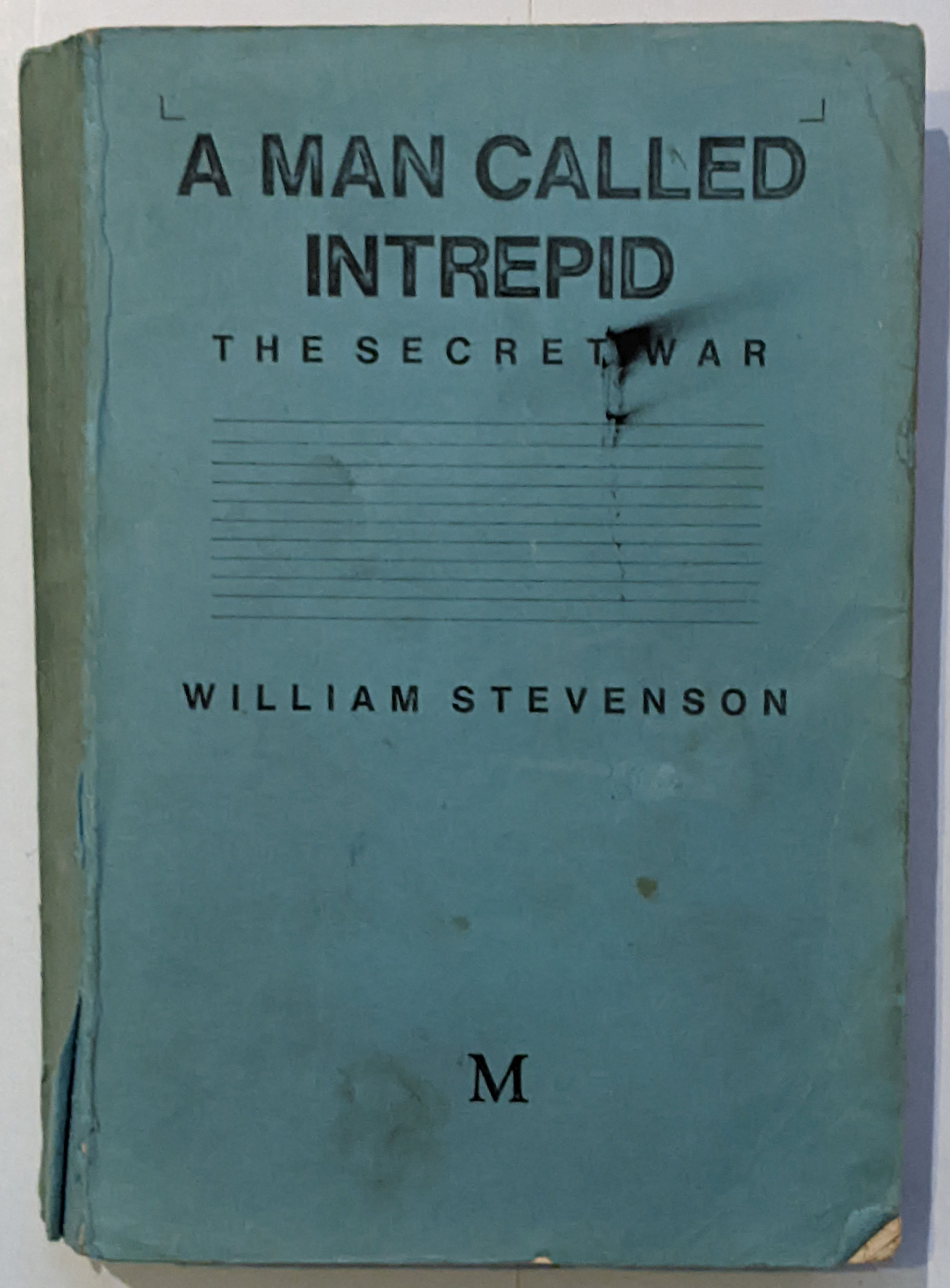
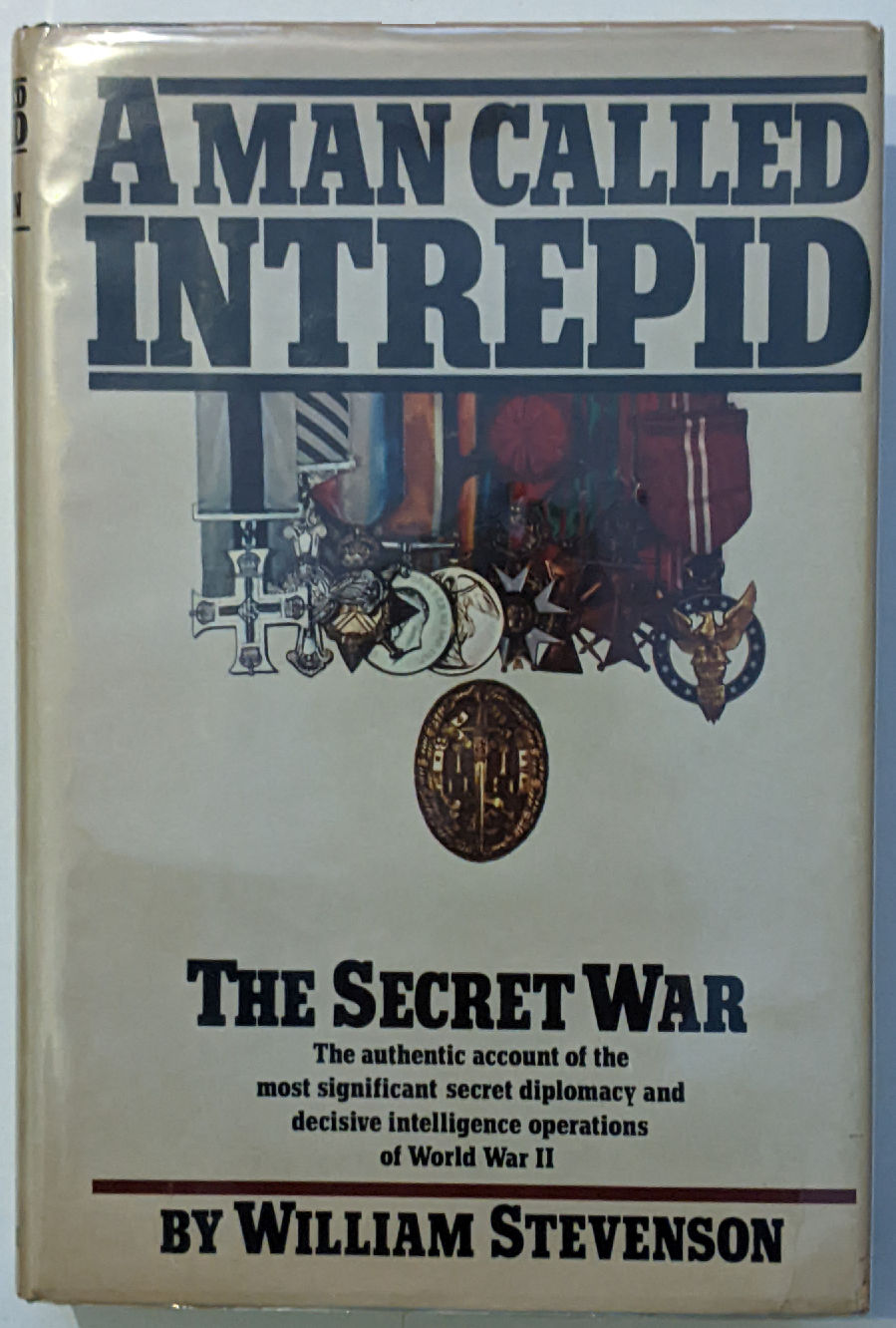
"A Man Called Intrepid - The Secret War" (486 pages) by William Stevenson, 1976. I have a hardcover copy in my collection. Hardcover book written by William Stevenson (ISBN: 0151567956). |
Hardcover book written by William Stevenson (ISBN: 0151567956). I also have a softcover "uncorrected proof" of this book - here is a photo of this book. From the inside book flaps, we have:
""A Man Called Intrepid" is the chronicle of the world's first integrated intelligence operation and of its chief, William Stephenson, whose code name "Intrepid", and bold mission were given to him by Winston Churchill. The year was 1940, when the survival of Britain and the fate of free nations hung perilously in the balance, "Intrepid" was charged with maintaining the closest possible but most guarded covert communication between Churchill and President Roosevelt, and also with establishing, from virtually nothing, a worldwide intelligence network that would challenge the staggering force of the Nazi juggernaut. The brilliant result of that mission, presented here in significant detail, was one of the best-kept secrets of World War II.
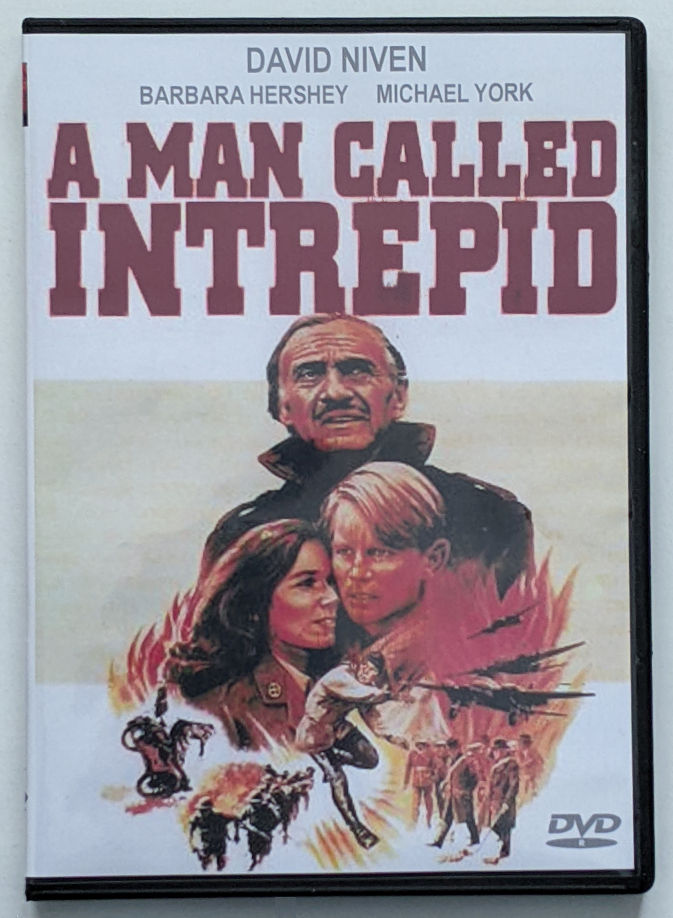
I also have a softcover "uncorrected proof" of this book - here is a photo of this book. There's also a made for TV series of this book - here is a photo of the DVD. |
|||

|
"The Secret History of British Intelligence in the Americas, 1940-1945" (536 pages) - 1999. | Written by Nigel West and published by St. Ermin's Press. From the inside flaps: "In 1940, Winston Churchill dispatched a Canadian industrialist to New York with an extraordinary mission in a neutral country: to set up a secret spy network across both North and South America to cripple and confound Nazi propaganda and to fan the flames of pro-war sentiment. Sir William Stephenson (of A Man Called Intrepid) set up shop in Rockefeller Center to build a vast intelligence network – British Security Coordination (BSC) – the full story of which is now told for the first time. Stephenson’s mission came at a time when the United States was still deeply influenced by isolationism. Stephenson’s people soon launched an astonishing bagful of dirty tricks – they unmasked Axis spies, planted propaganda in American newspapers, and slipped beautiful female spies in to the Vichy and Italian embassies in Washington to abscond with the naval ciphers of the two Nazi allies. Stephenson’s agents also infiltrated American labor unions, harassed their political enemies in Congress, and fed British propaganda and false rumors to such prominent journalists as Walter Winchel and Drew Pearson who were happy to give them wide circulation. Much of this book took place before the U.S. had entered the war, when the country was still neutral territory and British spying was illegal. But President Roosevelt winked at the law, and FBI chief J. Edgar Hoover collaborated as well, though reluctantly. After Pearl Harbor, Stephenson and the British spies helped William J. Donovan set up the OSS which eventually became the foundation for the CIA. In 1945, Stephenson ordered three of his subordinates – Gilbert Highet, Tom Hill and Roald Dahl – to prepare and official report of the network’s activities, of which fewer than ten copies survived all these years in utmost secrecy. Though there have been many, rumors over the years of the existence of the report, this is the first time it has been made public in its complete an unexpurgated form." |
|||

|
"Camp X - Canada's School for Secret Agents 1941-45" (327 pages) - 1986. |
Written by David Stafford and published by Lester & Orpen Dennys Publishers. Here are three paragraphs from this book: The Gouzenko case was the first important spy scandal of the postwar years and quickly gained status as a turning point in the emerging Cold War. As a result of Gouzenko's revelations several arrests were made in Canada. An atomic scientist, Alan Nunn May, was detained and then imprisoned in Britain, and in the United States investigations began that led ultimately to the executions of Julius and Ethel Rosenberg as Soviet spies in 1953. In spite of the remarkable consequences of his act, Igor Gouzenko was a relatively insignificant figure. It was less what he knew than what he brought with him that was important, and even now, forty years later, reverberations of the Gouzenko affair are felt whenever allegations about the presence of Soviet moles in the West are raised. He was a twenty-six-year-old cipher clerk working for Soviet military intelligence (GRU) in the Soviet Embassy in Ottawa when, on the night of September 5, 1945 - less that a month after Hiroshima and Nagasaki - he left the embassy with documents revealing details of extensive espionage the USSR conducted against its wartime Allies. At first Gouzenko encountered great difficulty in interesting people in what he had to offer, and he was turned away from both newspaper and government offices. The events surrounding his defection, and the subsequent trials in Canada and elsewhere, are now well known, but at the time, when Canadian officials realized the significance of his material, the case was kept from public knowledge for a combination of operational and political reasons. From September on, Gouzenko and his family were kept under close wraps, under the protection of the RCMP. For cover purposes, those involved in the case were told that he had been taken "up north". In fact the exact opposite was true. For most of the time the Gouzenko family were well to the south, hidden away at Camp X. The reason lay in Stephenson's direct involvement in the whole affair. By an accident of timing, which in retrospect must have appeared miraculous to those involved, Stephenson was on a routine visit to Ottawa the night Gouzenko spent wandering around looking in vain for asylum. From the exclusive Seigniory Club in Montebello, Stephenson phoned Norman Robertson, the under-secretary at External Affairs, to invite him for a drink. Instead within hours he found himself closeted with Robertson and Tommy Stone while the "Man of Influence" poured out his troubles and sought his advice. The problem, as always, lay the Canadian prime minister. Exhibiting his customary distaste for spying and undercover work, King had said tha he did not want Canada to get involved with Gouzenko at all. So far as he was concerned, he had told Robertson, they should let Gouzenko wander aroudn until he either went back to his embassy or committed suicide. "If suicide took place", King confided to his diary, "let the city police take charge and secure whatever there was in the way of documents, but on no account for us to take the initiative. If Canada got involved officially, it could only mean a further deterioration of relations with the Russians. Stephenson vigorously opposed King's view. ... |
|||

|
"Wild Bill and Intrepid" - 1996. | Authored by Thomas F. Troy, the book contains 252 pages and has the following entry - Was the Central Intelligence Agency solely an American accomplishment, the work of Colonel William J. ("Wild Bill") Donovan, as CIA tradition has held? Or was it in fact established through the workings of William S. Stephenson - the legendary "Intrepid", who directed British Intelligence in the United States during World War II? In this gripping book, a former staff officer and analyst at CIA unveils the true story of the birth of CIA ... | |||
|
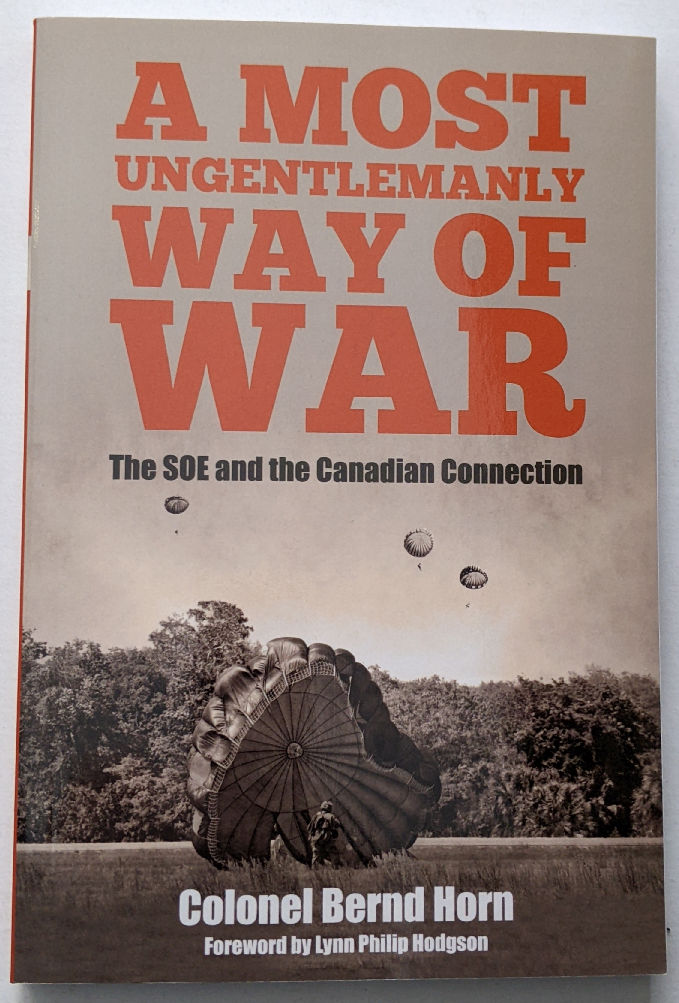
"A Most Ungentlemanly Way of War" - 1996 Softcover with ISBN: 9781459732797. | Authored by Colonel Bernd Horn, the book contains 238 pages and has the following description: An examination of the SOE, its accomplishments, and the Canadian connection to the organization. During the Second World War, British Prime Minister Winston Churchill created the Special Operations Executive (SOE) to conduct acts of sabotage and subversion, and raise secret armies of partisans in German-occupied Europe. With the directive to “set Europe ablaze,” the SOE undertook a dangerous game of cat and mouse with the Nazi Gestapo. An agent’s failure could result in indescribable torture, dispatch to a concentration camp, and, often, a death sentence. While the SOE’s contribution to the Allied war effort is still debated, and many of its files remain classified, it was a unique wartime creation that reflected innovation, adventure, and a fanatical devotion on the part of its personnel to the Allied cause. The SOE has an important Canadian connection: Canadians were among its operatives and agents behind enemy lines. Camp X, in Whitby, Ontario, was a special training school that trained agents for overseas duty, and an infamous Canadian codenamed “Intrepid” ran SOE operations in the Americas. |
|||

|
"The Mackenzie King Record - Volume III (1945-1946)" (424 pages) - 1970. |
Written by J.W. Pickersgill and D.F. Forster and published by University of Toronto Press. On the inside flap, we have the following entry: Volume III begins after the war has ended, and begins dramatically with a long account of the Gouzenko case. Its implications were felt in many areas, one of them being international relations in the difficult months after the end of the hostilities when the western allies were endeavouring to find ways of working with the USSR to form peace treaties and organize the United Nations. The awesome shadow of the atomic bomb is cast over most of the many discussions which the Prime Minister and his advisers have with the United States: Atlee, Churchill (the famous Fulton address is reported fully), Eden, Lord Addison, Bevin, Truman, Acheson. Chapter 2 titled "The Gouzenko Affair" is 40 pages long. Of note on pages 7-8: Parliament was to meet at 11:00 A.M. on September 6 so that the House of Commons could elect a speaker before the formal opening that afternoon. When the Prime Minister arrived at his office about 10:45 A.M. he was surprised to find Robertson and Wrong waiting for him. In his special secret diary he noted that both were looking very serious. "Robertson said to me that a most terrible thing had happened. It was like a bomb on top of everything and one could not say how serious it might be or to what it might lead. He then told me that this morning, just half an hour or so earlier, a man had turned up, with his wife, at the office of the Minister of Justice. He asked to see the Minister. He said he was from the Russian Embassy. That he was threatened with deportation and that once he was deported, that would mean certain death. That the Russian democracy was different than ours. "He went on to say that he had in in his possession documents that he had taken from the Embassy and was prepared to give to the Government. They would be seen to disclose that Russia had her spies and secret service people in Canada and in the U.S. and was practising a species of espionage. That some of these men were around Stettinius in the States, and that one was in our own Research Laboratories here (assumedly seeking to get secret information with regard to the atomic bomb). He indicated that he had had to do with the cyphering of messages. Robertson was not sure that he did not have the cypher code book with him. At any rate, he said that he had enough evidence there to prove that instead of being friends, the Russians were really enemies. "The Secretary [in the office of the Minister of Justice] had talked with Mr. St Laurent who thought it best not to see him. Robertson and Wrong were asking my advice, whether they should not have the mounted police take him in hand and secure the documents which he had. The man when he was told that the Minister of Justice would not see him, then said that he would have to commit suicide right there. There could be no hope for him because when the vault was opened at the Embassy, they would discover there that the papers had gone and would know that he had taken them. I said to both Robertson and Wrong that I thought we should be extremely careful in becoming a party to any course of action which would link the Government of Canada up with this matter in a manner which might cause Russia to feel that we had performed an unfriendly act. That to seek to gather information in any underhand way would make clear that we did not trust the Embassy. The man might be only a crank trying to preserve his own life. if he had information of the kind in his possession during the war, he should have given it to us at that time, if he had wanted to help the Government. It looked as though he was trying to make out a case which would cause our Government to protect him which, of course, he admitted he wanted. "Robertson seemed to feel that the information might be so important both to the States and to ourselves and to Britain that it would be in their interests for us to seize it no matter how it was obtained. He did not say this but asked my opinion. I was strongly against any step of the kind as certain to create an issue between Russia and Canada, this leading to severance of diplomatic relations and as Robertson pointed out, might have consequences on the meeting of the Council of Foreign Ministers which might lead even to the breaking up of that organization." ... (on page 10): "Someone at the head of the British Secret Intelligence had come to the Seigniory Club yesterday [Sir William Stephenson, head of British Security Coordination in New York]. He came up and saw Robertson last night. Robertson will a little later tell me of his talks with him on the whole situation. This man returned to the Seigniory Club at night. I am glad I insisted on Robertson not going down but having him come up. Robertson obviously is greatly fatigued. I will get further developments later. Dictated this while it was in my mind." The proceedings of the second day of the session were brief; much of the day was taken up by a Cabinet meeting, a garden party at Earnscliffe, and a private dinner at Government House in the evening. Before the Prime Minister went to Government House, Robertson came to Laurier House. He "said that during the day the police kept questioning the man. He had not in the afternoon heard what had come out of the questioning, but fortunately we were in the position that seizure had been made by the local police who had called in assistance of R.C.M.P., and that now the R.C.M.P. were guarding the situation. They would see that the man and his family were secreted and would not be seized. "After I got back from the garden party at Earnscliffe - it is always the way - the moment I take an hour or two off for social events, most important events come up. I would have given much to have been free of both Earnscliffe and Government House today - saw Robertson. His voice betrayed a tremendous concern. He said he had got particulars of what the police had and that everything was much worse than we would have believed. First of all he mentioned that all the documents had been photostated. The originals were with the Police still but we would have records now, and knew what was in them. They disclose an espionage system on a large scale. He said that it went lengths we could not have believed. Not only had Stettinius been surrounded by spies, etc., and the Russian Government been kept informed of all that was being done from that source, but that things came right into our own country to a degree we could not have believed possible. He then told me that they went into our own Department of External Affairs, that in the cypher room there was an agent of the Russians who had seen and knew all our cyphers and had known what they contained. The same was true at Earnscliffe. In the cypher room at Earnscliffe M. MacDonald's despatches were all seen, read and known. In our Research Laboratories here at Ottawa, where we had been working on the atomic bomb, there is a scientist who is a Russian agent. In the Research Laboratories in Montreal where most of the work was done there is an English scientist who is pro Russian and acting as a Russian agent. "He said at the Russian agency [sic] the man said there was the freest talk among themselves about the next war. He also said it was the Military Attache of the Embassy [Colonel Nicolai Zabotin] who had really been a direct agent of the Russian Government and was directing the proceedings for the Government in Canada. This man had been one of the pleasantest men that he, Robertson, had had to deal with. He said he thought he would try to get in touch with Stephenson in New York, along with F.B.I. men from the United States. He felt that what we had discovered might affect the whole meeting of the Council of Foreign Ministers; that if publicity were given to this it might necessarily lead to a break in diplomatic relations between Canada and Russia and might also lead to that in regard to other nations as well, the U.S. and the U.K. All of this might occasion a complete break-up of the relations that we have been counting upon to make the peace. There was no saying to what terrible lengths this whole thing might go." The Prime Minister authorized Robertson to inform the British High Commissioner and the American Ambassador of the situation "at a proper time" but "advised very strongly ... against taking any quick steps, any public disclosures, at any early moment. We must get the whole case as fully worked out as we possibly can. Avoid arrests, etc. Keeping an eye on everything and everyone. "Robertson said he had never been suspicious in his life. He felt now there was something that was real which had to be faced. What he felt most of all was that the people who were helping in this kind of thing were people supposed to be of the highest types of character. He doubted in some cases if it was at all for money. There was a sort of idealism of the Russian revolution which sought to get human rights for the masses of the people and this became a religion with some persons and they were prepared to do anything to further that movement. I think myself it is of course all part of a world revolution - a world communist movement to get on the part of workers a control of the Government completely out of the hands of those who have privilege, power, etc. But he, Robertson, says that democracy in Russia is not understood by our people. It is really a Russian imperialism - an autocracy of the most desperate and wicked kind, but they are using the language of idealism and words and symbols which while being used and understood by us in one way have a different meaning to them and have become symbols for this power of the worldcontrolled business." Mackenzie King went out to Kingsmere that night and the next morning (September 8) got in touch with Robertson again. "He told me that the Embassy was now demanding to know where this man was and wanted to get hold of him. I told him to make sure that they [the Russian Embassy] did not get out some writ of habeas corpus which might compel the officers to deliver them up .... He did not tell me where the man and his family were secreted, but I said I felt that at all costs we must not let him come into the hands of the Embassy people. He said there is no doubt that the police feel that the man would have been killed or would allegedly have committed suicide, had the two men from the Embassy and the two others that had been with them been able to get hold of him the night before last. He said this man is telling them everything and we will have a very full and complete story. Robertson said that Stephenson and F.B.I. representatives would be here tonight. I told him I would be available to come in from Kingsmere at any moment." In the evening the Prime Minister telephoned Robertson again, who reported that he had seen Malcolm MacDonald, the British High Commissioner, that morning. "He said he was calling Mackenzie [president of the National Research Council] this moment to let him know what relates to our own Research Department. Two on the British side will be coming up tonight and F.B.I. men will be here in Ottawa on Monday morning. Meanwhile a letter had come today from the Russian Embassy asking for the man, claiming that he had stolen money from the Embassy and I think Robertson said should be held for capital punishment. He says the man is out in the country. We have him secure. Robertson suggested we send no answer to the Russian note until Monday. I have asked him to see if, meanwhile, some steps cannot be taken whereby this man can be held by the Crown in a way that will prevent the Russians getting near him at all. Robertson said of course the man himself is clinging to us, would not leave on any account. To do so would mean certain death for him. Robertson feels, with the background of what we know, the letter from the Embassy is impudent." ... (on page 27) On Saturday, September 22, Mackenzie King drove from Montreal with Ernest Bertrand to Godbout's farm at Frelighsburg for a huge and highly political picnic in honour of the Quebec Liberal leader's birthday. He drove back to Montreal with Claxton who, on the way, suggested the appointment of A. D. Dunton as president of the Canadian Broadcasting Corporation. "I told him to feel him out to see if he would be interested." Back in Ottawa, Mackenzie King kept an appointment at Earnscliffe on Sunday evening to discuss the Gouzenko case with Sir William Stephenson and several other Canadian and British intelligence officers. "The first question discussed was the alternative method re security; one was to allow everything to be hushed up and not proceeded further; another was to take action at once and let the British and U.S. governments know the situation with a view to taking what steps might be best to prevent further developments. The third was adopting a course which would make the whole thing public, immediate arrests made and getting additional information at trials, etc. My own view was that the second course was the appropriate one, and I found that that was the view that appeared to be generally held. It was discussed in relation to the larger question of what was wisest from the diplomatic and political points of view. We all agreed it would not do to let the matter pass as though it were something which should not be disclosed to the Russians, nor would it do to have publicity given to the whole business at this time. That the best course would be to have the British and United States Governments and ourselves work together on the highest level, and let the Russians know what we know with a view to discovering from them whether they intended to really try to be friends and work for a peaceful world or whether a course should be taken toward them which would lead to having all nations against them. "I strongly favoured the direct approach to them, once everything had been worked out at the highest level. "The question then came about sending word to the British and to the Americans. A telegram went some days ago to the British Government but no reply has come yet. We do not know whether Byrnes, the United States Secretary of State, has been informed of what was sent to Bevin. The President knows nothing thus far." ... |